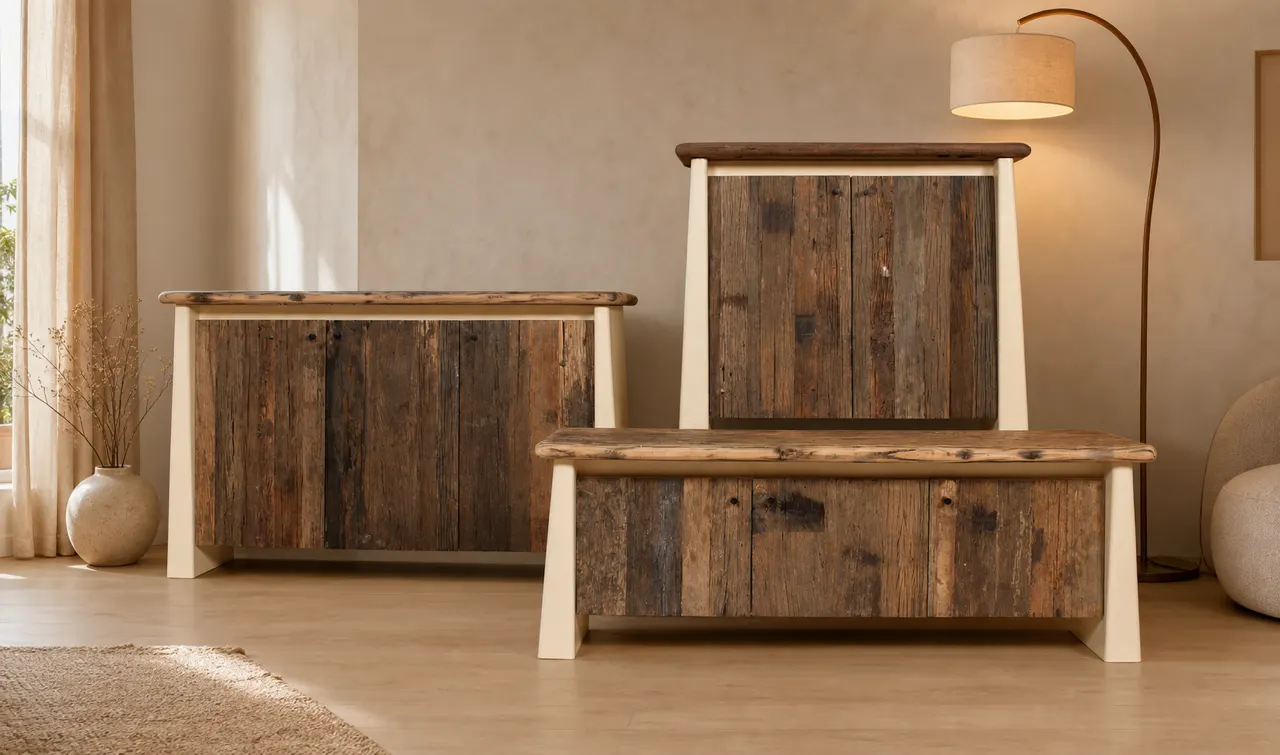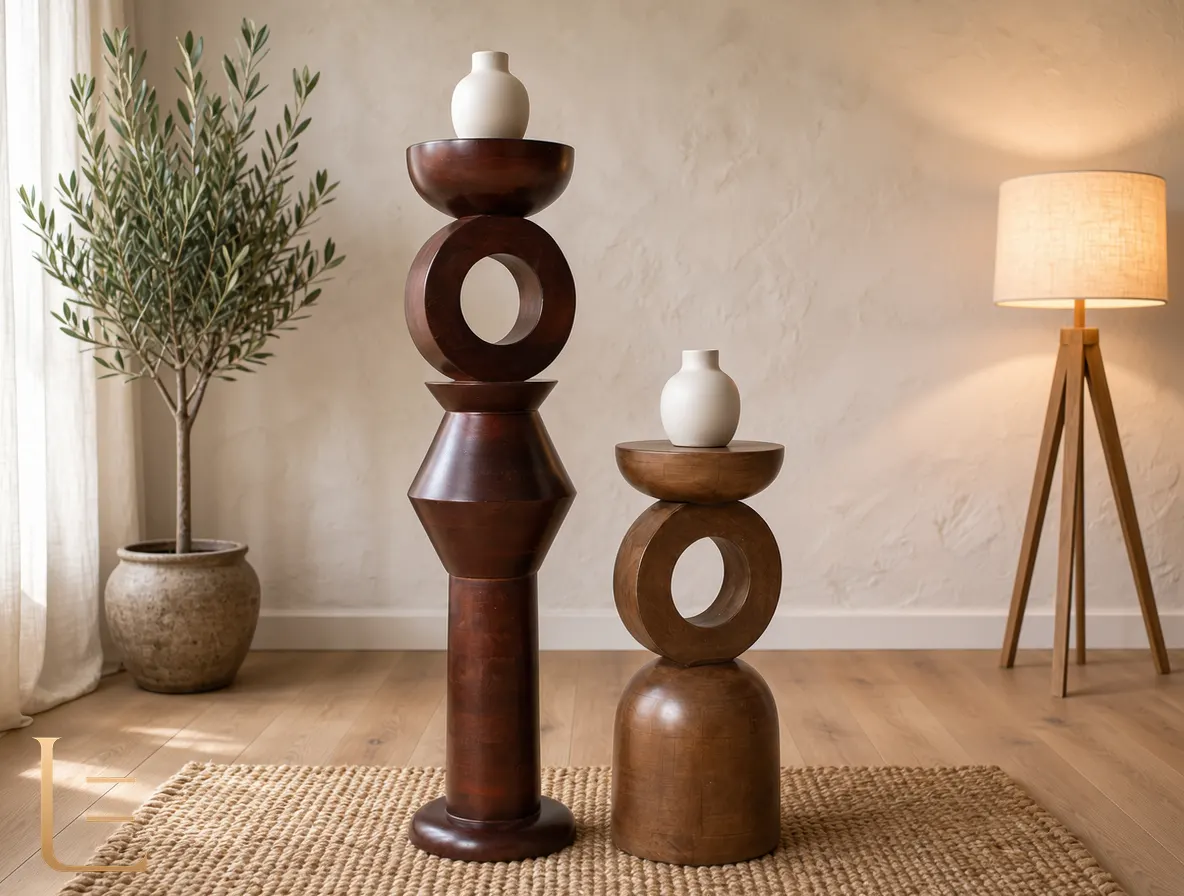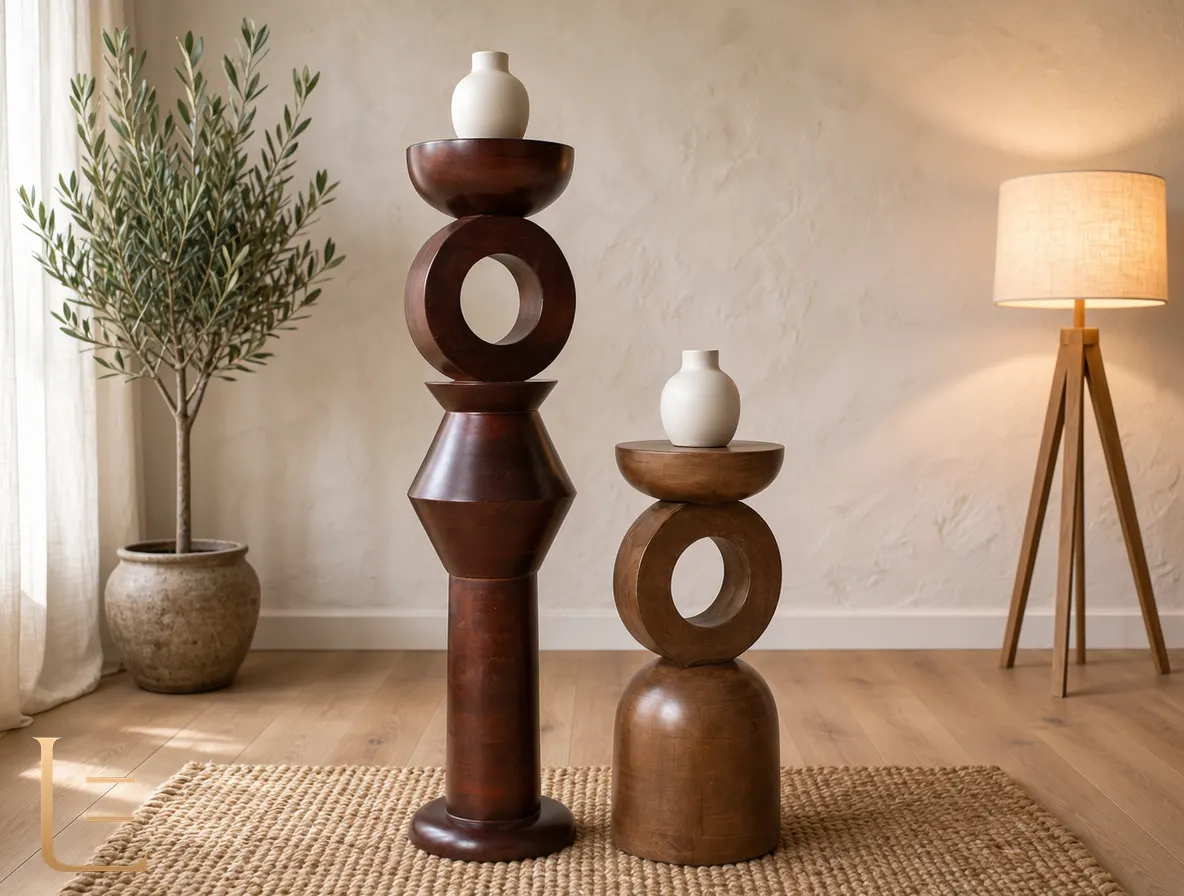
Why Solid Reclaimed Wood Travels Well
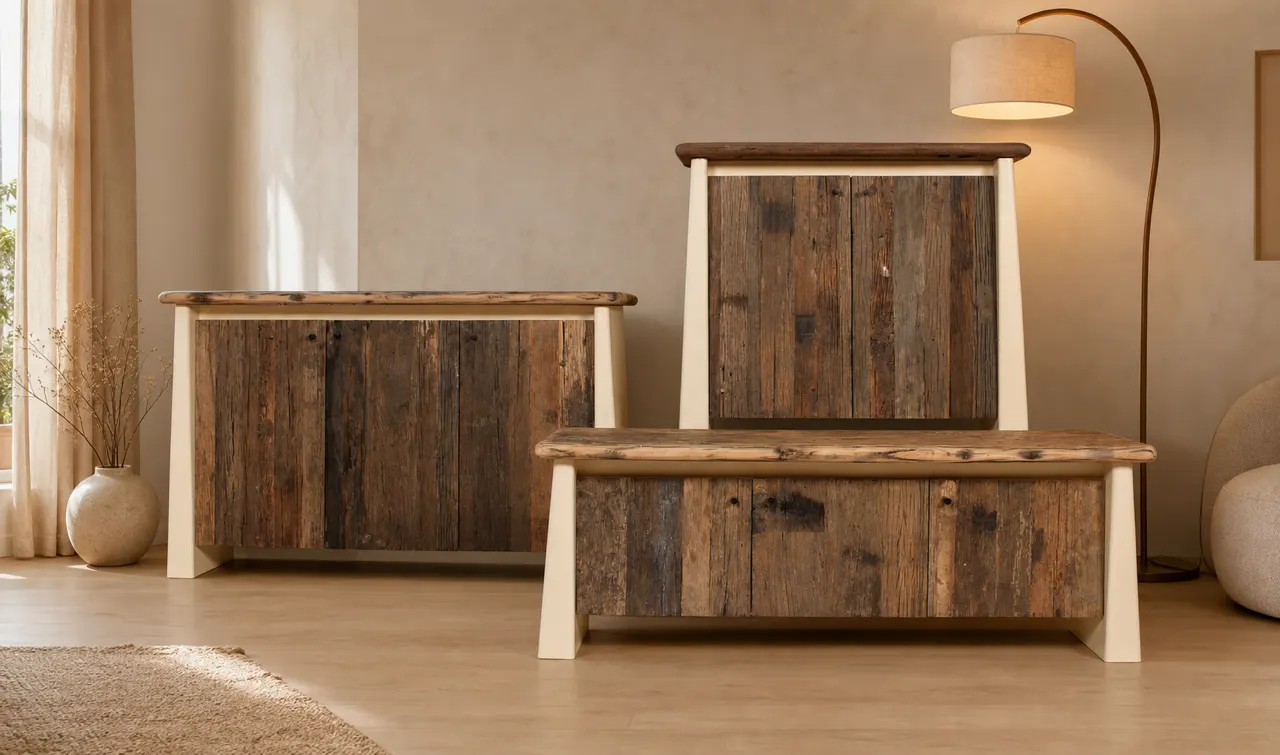
Mango is one of the most export-friendly hardwoods we work with — dense enough to last, stable enough to survive a sea container. Here is how we season and finish it.
Furniture that leaves Jodhpur may spend six weeks in a container before it reaches a showroom in Lyon or a warehouse in Rotterdam. Humidity swings, temperature changes and constant movement all act on solid wood — which is why the timber we choose matters as much as the joinery.
Why we favour mango
Mango (Mangifera indica) is a by-product of the fruit industry: trees are felled once they stop bearing well, so the timber is genuinely renewable rather than harvested purely for wood. It is a medium-density hardwood with an interlocking grain that resists splitting, and it takes stain and wax beautifully.
Seasoning before anything else
- Air drying — boards are stacked and stickered for several weeks so moisture leaves slowly and evenly.
- Kiln seasoning — we bring moisture content down to roughly 8–10%, the range that stays stable in both European winters and Gulf summers.
- Rest period — timber is left to settle after the kiln before it is cut. Rushing this stage is the single most common cause of warping later.
Building for movement
Solid wood always moves a little with the seasons. Rather than fight it, our joinery allows for it: floating panels, breadboard ends and slotted fixings let a top expand and contract without stressing the frame.
Finishing for the destination
Finish is chosen for where a piece is going. Hardwax oil suits interiors where the buyer wants a matt, repairable surface. A lacquered finish gives more protection for hospitality projects that see heavy use. Both are applied by hand, in thin coats, with sanding between each.
The result is a piece that arrives looking the way it left our workshop — which, for an exporter, is the only standard that counts.